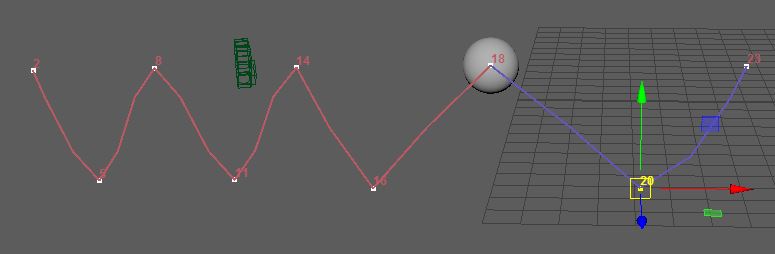
grease pencil- make notes on the screen and track your walk cycle
motion trail shows where trajectory of object went, can add and subtract trajectory and refine it.
icon next to playblast arrow
ghosting (white and orange balls)_shows onion skinning in motion- a few frames before and after while in motion. You can tell it how many before and after in the animation menu
ghosting off button is right next to it (clear balls)
bake animation: put key frame into every frame of animation
s gives you a keyframe on everything. key from on translation, and rotation and scaling?
animation graph?animation editor
can animate in layers to have choices of how to fine tune performance
create a character walk cycle for character
if rig is not moving, the man with the red hand is in one component mode. click on half body or full body to get it moving again.
do not animate from original skeleton (white man icon) or the rig will break.
next to running man animation icon, the plus sign with arrows circling it is the auto key icon. make sure it isn't selected!
turn off geometry with quilted diamond icon so you don't grab the character by accident instead of the bones.
Thursday, May 19, 2016
BSA206, film history, Italian neorealism, 19 and 23 May, 2016
Describe the conventions of Italian neorealism
Neorealism criticises the view of society as collection of people who are indifferent to suffering of others. A response to the end of the fascist government of Benito Mussolini.
The "White Telephone" or telefono bianco films of the 1930s were popular melodramas but weren't reflective of real life in Italy. Neorealism looked very realistic in comparison to these films.
Emphasis was on "reality"- filming on location, non-actors, natural lighting, doco-style, focused on working class and poor.
Directors:
Luchino Bisconti
Ossessione (1943)
not strictly neorealist film but shares some qualities of the style by being less flattering of life in Italy.
Roberto rossellini
Rome Open city (1945)
Paisan (1946)
Germany Year Zero (1948)
Vittorio De Sica
The Bicycle Thief (1948)
the masterpiece of italian neorealism and also on many best films lists
used location shooting and non-professional actors
from Vaughn Millar's powerpoint presentation.
Italian Neorealism and Global Cinema
review of The Bicycle Thief based on conventions of Italian neorealism
I missed the first half of the film, but I liked what I saw based on the last half. Using a non-professional actor to play Bruno, the son, was a great idea. He was very natural as he cycled through sadness, happiness and fear as he and his father went searching for the missing bicycle. The father's dogged determinism and ultimate defeat was wonderfully conveyed by the adult actor, also a non-professional. Everything felt very real. With all the amazing architecture in Italy, I wonder why filmmakers would have used fabricated sets. To an international audience, watching the movie after its release would have seemed like a view into the real Italy. To an Italian audience, it must have felt like someone really understood what they were going through post-WWII. It might have been comforting, or they may have longed for the return of the 30s musicals and glamorous melodramas.
Wednesday, May 18, 2016
BSA202, audio, recording ambient noises, 18 May, 2016
need recordings for
crowd noise x
computer room hum
air conditioner room hum x
quiet hallway x
make list of things to take to SIT sound
finish dialogue timings list
crowd noise x
computer room hum
air conditioner room hum x
quiet hallway x
make list of things to take to SIT sound
finish dialogue timings list
Saturday, May 14, 2016
BSA225, lighting and populating the cantina, 14 may, 2016
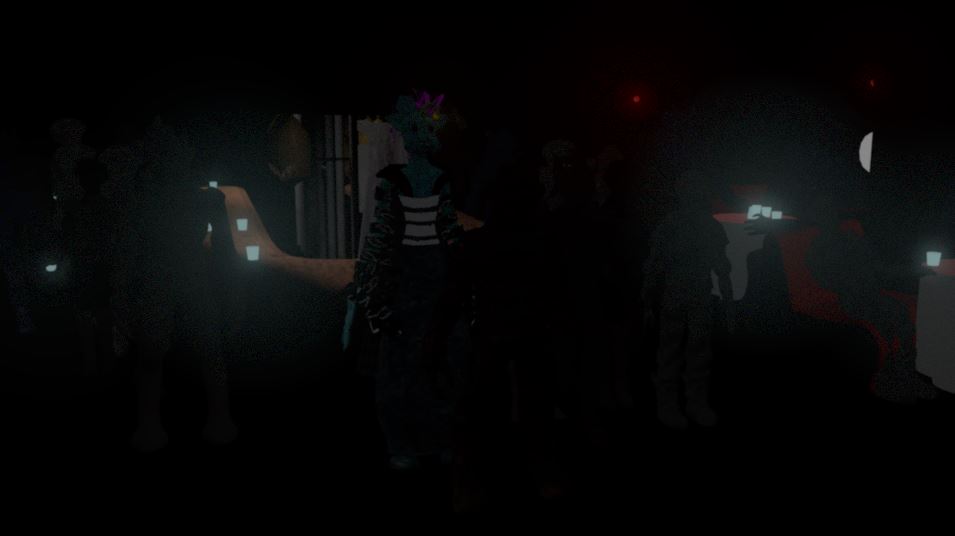
Vaughn showed me how a directional light from the very back of the room will add a slight glow to the characters and will pop them out from the background. I will add that this weekend. Current view is no extra lights.
Friday, May 13, 2016
To do list 13-16 May, 2016
BS
Audrey Niffenegger artist model annotation and interlibrary loan order
continue to animate storyboard
meet Deb Wattes 10 am Saturday 14th
set up corrected entries for printing on test and nice paper
BSA202
dialogue and timings of Matrix clip
BSA225 3D animation
3? new alien patrons and bartender
finish populating cantina
add more Klimt texturing
BSA226 3D character
finish blend shapes: side hair, blinking, bangles, cape, alien patrons
connect/skin? skeleton to body
BSA20 film history
pick a film/research thread for German Expressionist paper
Drawing
3 A2 architectural/people drawings
Audrey Niffenegger artist model annotation and interlibrary loan order
continue to animate storyboard
meet Deb Wattes 10 am Saturday 14th
set up corrected entries for printing on test and nice paper
BSA202
dialogue and timings of Matrix clip
BSA225 3D animation
3? new alien patrons and bartender
finish populating cantina
add more Klimt texturing
BSA226 3D character
finish blend shapes: side hair, blinking, bangles, cape, alien patrons
connect/skin? skeleton to body
BSA20 film history
pick a film/research thread for German Expressionist paper
Drawing
3 A2 architectural/people drawings
Thursday, May 12, 2016
BSA203, ProPrac, Artist model Frida Kahlo, 10 May, 2016
| The Two Fridas (1939), oil on canvas, 68 1/4" x 68".Museo de Arte Moderno, Mexico City, Mexico |
Magdalena Carmen Frida Kahlo y Calderon was born 6 July, 1907 and died 13 July, 1954 in Coyoacan, Mexico. She studied medicine as a young woman but took up painting when she became immobilized for three months after a bus accident. She focused on self-portraiture because "...I am often alone and I am the subject I know best." She drew on personal experiences including marriage, miscarriages and numerous operations. Her work is often characterized by stark portrayals of pain. Of her 143 paitings, 55 are self-portraits which often incorporate symbolic portraits of physic and psychological wounds. Kahlo was deeply influenced by indigenous Mexican culture and her work reflects this in the use of bright colours and dramatic symbolism.
http://www.frida-kahlo-foundation.org/biography.html
.
http://www.fridakahlofans.com/c0290.htm
Frida Kahlo's work has been a model for my own work in self-portraiture for most of my career. She is an active participant in whatever life event she is chronicling rather than a passive viewer looking in from the outside. In The Two Fridas, both sides of herself stare straight back at the viewer: whatever you may be thinking, she was thinking (and painting) it first. Her use of anatomically correct hearts, attention to costume detail, and the unflinching gaze keep the subject, her heartbreak, from becoming sentimental or small.
Kahlo painted Self-Portrait with Cropped Hair (1940) shortly after she divorced her unfaithful husband, the artist Diego Rivera. As a painter of many self- portraits, she had often shown herself wearing a Mexican woman's traditional dresses and flowing hair; now, in a renunciation of Rivera, she painted herself short haired and in a man's shirt, shoes, and oversized suit (presumably her former husband's).
Subscribe to:
Posts (Atom)