Friday, June 3, 2016

BSA203, ProPrac, Evaluating the project, 2 and 3 June, 2016

1.  Why am I doing this project?   What specific things did I want to achieve?  How will I identify success?

I did this project because I've long wanted to put it into the public sphere and to progress it into a book.  I never thought I'd be able to animate it, too!

Targets achieved:  Six new pieces (doll sculpture, 50s woman parts 1 and 2, poison pen, shadow, and frogs), 2 booklets made of those pieces and all the pre-existing stuff, one animation, and one commissioned song.

2.  How will I collect the evidence I need?
How will I personally collect evidence?
Ongoing collection:  blog, photos, writing, pieces on display
interviews with tutors and classmates.   Was my research question answered?

3.  What does the evidence tell me?
Installation team:
animators and filmmakers/those who needed prints didn't get foam boarding organized pre-installation.  That happened between 10 and 12:45pm Wednesday morning when the finished pieces had been requested for 9 am.  For next time:  nominate someone within that group, preferably an animator with experience, to coordinate the group effort for foam boarding to support those who have never done it.  The class swore that they didn't know the pieces were due at 9 am and thought they were due at 11.  Ok, but they weren't ready to  hang at 11, either!  The animators really rely on Rachel to set everything up before our exhibitions.  It needs to be clear that they have to be self-sufficient in this course and organize things themselves.

Proofreading team:  It took an extra week to chase down those few final artist statements and missing pieces.  And when it all came together, formatting issues added 3 hours to the work load of the proofreaders.  For next time:  Make a template BEFORE artist statements are due, leave it in the folder on Y drive,  and have the artists fill it in themselves.  There will still be issues, but it will take the bulk of the work out of proofreading.  Also, artist's pieces need to be proofread by SOMEBODY before printing or final export.  Four was a good number of proofreaders and other people offered to help out on Friday with printing, cutting and hanging.

4.  What have I learned from the evaluation?  How will I do things differently in future?
As a result of the project:  I increased my skills in Toonboom Storyboard pro, widened my exposure to the work of female graphic novelists, got experience of working to put together a gallery/art exhibit, got to see my classmates achieve something exciting and personally/artistically fulfilling for themselves.  I think everybody had a win with their projects.  I got to contribute to the artistic statements making sense and being typo-free!

I liked the object grouping: the doll and two books beside the animation.  Deb's song made it in!  That was very exciting.  Do better:  more time to edit animation, had finished doll early so I could have shot it in stop motion for animation.  No point in picking at this, though, because I spent lots of time on it and am so happy I fulfilled my goals of 5 new pieces, little books AND animatic.


I should have talked to Rachel and Vaughn/classmates a month ago about setting up cameras in Storyboard Pro.


Long term repercussions: I will have an animated video and Deb Wattes will be able to use it to promote her music. 


I can do better in future by simplifying my goals and giving myself TIME to edit.  Going forward, consider the book:  does the story come through?  Or is it only vignettes?  Maybe that's just fine, you know, Different.  Better delegation of jobs and always being prepared to give people work.  


What was hard?  Committing to ideas so work could start, and be finished, sooner.   I'm thinking of the five new pieces I finished the weekend before gallery happened.  Collaboration with Deb was easy.  Dropped ball with music and didn't keep communication about what I was doing , going.  Very lucky, very happy, that it all came together to be in exhibition.  I needed more time for editing and should have been done with art pieces week BEFORE hand-in so I could be completely present for installation and proof-reading.  Other classes suffered because of my single-minded foucs on this project and lack of time management.  Timeline was too loose and didn't anticipate all of my needs (like editing or gallery duties).  Get feedback from Deb on communication, timeline and collaboration.


Did I overreach?  Yes.  I achieved my goals but at the expense of my 3D animation classes.  Balance is important.  

Getting feedback along the way on the progress of my piece would have been helpful, as would getting tutor feedback and remedial instruction on storyboard Pro cameras. 

Process methodology:  paper too weak for size and design of big accordion book.  Perfect for mini book, though, as glue-reinforced pages.


Next phases of project:  shading painting on 50s woman/boxes pieces for better result in keeping with 50s advertising model.


Edit animatic for time and music.  Collaborate with Deb Wattes on this.  Talk to Helen about editing.  Some images need beefing up (Phoenix) and others need to go (yellow tree?)

But, don't forget storybook quality of final animation.  It needs the doll stop motion segments and pages of the book turning.

 5.  Who will I tell about the project and why?  How will I tell them?  What will I tell them?
Going forward (post-gallery): interview tutors (assessments), ask 3 classmates, final critiques

post-gallery feedback:
Bex: multi-disciplinary show, very diverse, a lot of good work
James Wilkinson: a lot of work, should inspire visual artists to lift their game
Tim the filmmaker: like how my animation is still rough, all the movement to the drawings
Glenn:  Symbolism!
Josh: A+!
Jo Pryde: keep going, take as long as you want to recover, keep making art that deals with this, loves the little book, the intimate nature of reading it.
Tim the musician:  sought me out to discuss the animation.  really liked the Medusa character, loved the music's hard quality and noted that it toughened up the animation


  • Deb Wattes
    1:37pm
    Deb Wattes


    Its fucken awesome. I'm astounded at how well the changes in the music fit the change in the energy of your work... Its really good, Traci

    the axe breaking the twigs for the dove to fly free was really powerful and I felt it was perfectly placed after all the story that came before it...
  • 1:40pm


BSA226, lip syncing, 2 and 3 June, 2016

http://www.11secondclub.com/competitions

audio source: Is there alcohol in this?

three mouth shapes to get by in lip sync: closed, open and pursed (ooo or o sound)

Oh, dear Lord.   I had no blend shapes to make the mouth.  I had no time to work it out, either, because I gave myself a  whole HOUR AND A HALF to do a lip sync.  With Ben's help, I got a good mouth blend shape but that lasted one frame and then the clothes ran away from the body.  Oops.
So I punted.  I did some head acting.  Then I got this really great, really TERRIBLE idea to try to do blend shape eyeballs and ended up with no blend shapes and no eyeballs.  The new eyeballs I made are jumping all over the place because I had to key frame to keep the eyeballs moving with the head.  Does it add to the performance?  Probably not.  But don't just take MY word for it:

Forward!  Will do better next time.  Reuben says to focus on a few really great shots for the show reel and let the rest of the animation try to keep up.

Thursday, June 2, 2016

BSA202, audio, Matrix ADR and foley, 1-8 June, 2016

Glenn will make a library of foley sounds while I sort through the ADR recordings we made at SIT sound Friday night.  I will assign each file to it's line name- first initial of speaker plus number of line of dialogue ex. N1, N16 etc. for Neo.

mixing levels
0 is too loud and distorted
floor noise around -36, dialogues around -24, loud noises -12
watch clip to note where noise levels are
Neo
-36 listening to music
foley peaked at -27, putting down headphones
boom jumps to -21
whispering is -42
knock knock up to -9
who's is it shoult-24
door slame-15
room tone, floor noise around-54  never silent
club noise up to -15, -12 drops down to -24 before they start talking
conversation with trinity betwen -21 and -18
Audio track, assigned line name and number, dialogue
Reuben as Neo
track 1- N1-N7
track 2 delete
3- delete
4- delete
5 delete
6 N1-23 incomplete
7-delete
2-01 exhaling
3.44_15 N18: How do you know that name?
3.44_16 N20 pt 1 Trinity.  The Trinity?
3.44_17 N20-21 That cracked the IRS d-base? Jesus.
3.44_18 N22-23 I just thought um... you were a guy.
3.01  N1 What?
3.02 delete
3.03 delete
3.04 delete
3.05 N2-3a What the hell?  Follow the White Rabbit?
3.06 N2-3b What the hell?  Follow the white Rabbit?
3.07 N4-5 exhales.  who is it?
3.08 N7-9 You're two hours late.  You got the money?  hold on.
3.09 delete
3.10 N11-12a right. my computer ("it" is inaudible)
3.11 N11-12b  right.  my computer it..
3.12 N14 You ever have that feeling where you're not sure if you're awake or still dreaming?
3.13 N15-17 No, I can't, I have uh.. work tomorrow.  exhales yeah, sure, I'll go.
3.14 N18-23 Who are you? Trinity. The trinity?  that cracked the IRS d-base? Jesus.  I just thought, um... you were a guy.

Brad as Choi
DuJou-Glenn.61_08   C9a  Something wrong, man?  You know, you look a little whiter than usual.

 DuJou_Glenn.66.09_01   C9b  Something wrong, man?  You know, you look a little whiter than usual.
DuJour_Glenn72_10 C9c you know, you look a little whiter than usual
DuJour_Glenn72_11 C10 mmm, all the time.  It's called mescaline.  It's the only way to fly.
DuJour_Glenn88_12 deleted
DuJour_Glenn88_13 C11a Hey, now this just sounds to me like, you know, you need to unplug, man.
DuJour_Glenn88_14  deleted
DuJour_Glenn88_15 C11b Hey, now this just sounds to me like, you know, you need to unplug, man.
DuJour_Glenn88_16 C12a You know, get some R and R.
DuJour_Glenn88_17 C12b You know, get some R and R.
DuJour_Glenn111_18  C12  what do you think, DuJour? Should we take him with us?
DuJou_Glenn_01  C1  It's Choi.
DuJou_Glenn_02 C2-4    I know.  It's her fault.  sigh.  Two grand.

DuJou_Glenn_03  C5 Hallelujah.  You're my savior, man.
DuJou_Glenn_04  C6-7a  exhales.  My own personal Jesus Christ
DuJou_Glenn_05  C6-7b   exhales.  My own personal Jesus Christ
DuJou_Glenn_06  C8a  Yeah, I know, this never happened.
DuJou_Glenn_07   C8b  Yeah, I know, this never happened.  You don't exist.
Lady.03_02    DJ2a  Definitely.  Come on.  It'll be fun.  I promise...
Lady.10_03  DJ2b  Definitely.  Come on.  It'll be fun.  I promise...
Lady_01    DJ1-2c  lip smacking
Traci_Trinity.29_08    T4-5a That was a long time ago.  What?
Traci_Trinity.29_09  T6a  Most guys do.
Traci_Trinity.29_10  T6b  Most guys do.
Traci_Trinity_01   T1  Hello, Neo.
Traci_Trinity_02  T1b Hello, Neo.
Traci_Trinity_03   T2a   I know a lot about you.
Traci_Trinity_04   T2b   I know a lot about you.
Traci_Trinity_05   T3a  My name is Trinity.
Traci_Trinity_06   T3b  My name is Trinity.
Traci_Trinity_07  T4-5b  That was a long time ago.  What?

How to set up a bus?  in Pro Tools for reverb in the scene
characters are all inside.  we recorded ADR in "dead space" so we need reverb to bring voices into the space.  just need a little bit so you don't notice it's there.  too much sounds like inside a tin can. The bus keeps the processing power down, so you don't put it on every track,  and you can control where the reverb goes.

new track, stereo, aux track
make sure inserts a-e and sends a-e have been selected next to track.
right click under insert multi-channel plug in reverb,  d verb
no input bust 1-2
under sends, choose voice track you want to go to the bus.  slider will come up so you can control how much reverb goes on each track


How to hand in:
create a folder with both names on it.
in Y drive, there will be clear instructions on how to label everything so it can found by Vaughn during the marking period
sound sheet:  make list of all things we did not record ourselves: foley and music sources, so there is no plagiarism.
 turn in a .mov with tracks attached to it.
all midi info should be gone from file for final hand in
solo everything for bounce out or mute all things you don't want included, like original movie and track
save as main line out/stereo, WAV and format interleaved, name it final mix
once bounced out,  bring it into mix again and solo it.  make sur eit runs full length of movie an dnot just a bit.
solo it and movie and bounce out to quick time?  save with our names on it.
listen to the whole mix to make sure something weird wasn't introduced.


BSA203, ProPrac, checklist for a good journal, 2 June, 2016

What should an A Level Art sketchbook contain?

A sketchbook is a creative document that contains both written and visual material. It is a place for researching, exploring, planning and developing ideas – for testing, practising, evaluating and discussing your project. It is the place where you learn from other artists and express and brainstorm ideas.
The sketchbook is an important part of your Coursework project. It shows the journey (or development) towards your final piece and usually contains:
      Drawings, diagrams, thumbnails, composition plans, paintings and/or designs (particularly those that are incomplete or experimental)
      Practise and trials of different techniques and processes
      A range of mixed mediums and materials
      Evidence of first-hand responses to subject matter and artworks, demonstrated through observational drawings, photographs and annotated pamphlets and sketches from exhibitions or gallery visits. (Note: the sketchbook must NOT be used as a dumping ground for fliers and pamphlets. If you are going to glue something in, evaluate it, discuss its relevance and explain how it helps to inform your own work)
      Digital printouts of relevant artist work
      Annotation (see below)
Note: The sketchbook should NOT be used as an all-purpose journal for doodling cartoon characters or scribbling notes to a friend. All work contained within your sketchbook must support your Coursework project as a whole.


How to annotate an A Level or GCSE Art sketchbook

The following tips and guidelines should help you understand how to add quality notes to your pages:

      Reveal your own thinking and personal responses (rather than regurgitating facts or the views of others)
      Explain the starting points and ideas, emphasising personal relevance and your own connections to subjects
      Critically analyse and compare artwork of relevant artist models (both historical and contemporary artists, from a range of cultures). Discuss aesthetics, use of media, technique, meaning/emotion/ideas and the influence of an artist upon your own work. While it is important to conduct research into your artist models (and to convey an understanding of this information), avoid copying or summarising large passages of information from other sources. Instead, select the information that you think is useful for your project and link it with your own viewpoints and observations. Use research findings to make you sound clever and knowledgeable – to prove that you are aware of the artists and cultural influences around you – and to help you to critically evaluate artworks (by giving you background information and a peek into the mind of an artist): do not use it to fill your sketchbook with boring facts
      Demonstrate good subject knowledge, using correct vocabulary (phrases such as ‘strong contrast’, ‘draws the eye’ and ‘focal point’ etc)
      Reference of all images, artwork and text from other sources, ensuring that artists, websites and books are acknowledged (it should be obvious to an examiner which work is yours when viewing a page, so cite sources directly underneath the appropriate image. Photographs taken by yourself should be clearly labelled, so examiners know the work is yours and reward you for it)
      Communicate with clarity. It doesn’t matter whether you jot down notes or use full sentences, but never use ‘txt’ speak and try to avoid incorrect spelling, as this indicates sloppiness and can hint to the examiner that you are a lower calibre candidate
When annotating a GCSE or A Level Art sketchbook, it may benefit you to contemplate the following:
      What subjects / themes / moods / issues / messages are explored? Why are these relevant or important to the artist (or you)?
      What appeals to you visually about this artwork?
      How does the composition of the artwork (i.e. the relationship between the visual elements: line, shape, colour, tone, texture and space) help to communicate ideas and reinforce a message? Why might this composition have been chosen? (Discuss in terms of how the visual elements interact and create visual devices that ‘draw attention’, ‘emphasise’, ‘balance’, ‘link’ and/or ‘direct the viewer through the artwork’ etc.)
      What mediums, techniques (mark-making methods), styles and processes have been used? How do these communicate a message? How do they affect the mood of the artwork and the communication of ideas? Are these methods useful for your own project?
      How does all of the above help you with your own artwork?

Sketchbook Presentation Ideas


Layout and presentation is an area that many GCSE and A Level students struggle with – often spending hours adding decorative features to their sketchbooks that make little difference to final grades. In appearance, a sketchbook should be reminiscent of what you might expect an artist or designer to create. It should not be a tacky ‘school project’, with colourful headings and sparkly backgrounds. It does not need to be – and indeed, should not be – heavily structured or ‘over worked’. It does not need to be rigidly ordered, excessively flowery or decorative. You do not need to spend time adding borders; typing out the annotation or working obsessively over pages again and again. The sketchbook is NOT meant to be a complete a book of finished artworks and illustrations; it is meant to be creative document of exploration and investigation. A place where an art student thinks, works things out and learns.
      Select a good quality sketchbook and/or a collection of artist papers and found materials. The difference between work produced upon cheap, flimsy sketchbook pages that warp at the mere hint of moisture and that produced on thick, rich, ‘wet strength’ paper can be enormous. Even a garish cover design can negatively influence enthusiasm. If you have a choice in this area, buy a quality sketchbook and/or collection of paper / drawing surfaces. Begin with something that inspires you.
      Let the artwork shine. Do not distract from your practical work by using large lettering, decorative borders, or unnecessary framing or mounting. Do not spend weeks researching, preparing and reworking beautiful backgrounds – wild drips of coffee, torn paper, layer upon layer of careful speckled mediums – if this compromises the amount of time you spend on the artwork itself. Producing quality art or design work is your number one goal.
      Vary page layouts to provide variety and visual interest. Some pages should have many illustrations; some should have single, full-page artworks; others should be somewhere in between. Position items carefully on the page as you work: making sure pages are well-composed.
      Use a consistent style of presentation, so that a consistent visual language unites the sketchbook. Some students are drawn towards hard-edged, ordered presentation methods (often those studying graphic design, for example); others prefer messier, looser, gestural presentation styles. Neither is better than the other: both can be amazing. Inconsistency, however (pages jumping from one presentation style to the next), can result in a submission that is distracting, busy and hard on the eye.
      Be selective. More is not necessarily better. Although examiners look to reward candidates and have your best interests at heart, bulking up your sketchbook with poor work does you no favours. Weak work can set off alarm bells for an examiner, leading them to be on the lookout for potential weaknesses elsewhere. This does not mean that you should discard everything which is not perfect (work should rarely be thrown away, as most things can be worked over and saved for far less effort than would be required starting anew), but you must discriminate. Don’t automatically include everything. Select work which shows the journey your project has taken and presents your skill in the best light.
      Save the annotation until last. It doesn’t matter how intelligent, well informed or clever your annotation is – it cannot redeem rushed, poorly executed practical work. Only once images on a page are complete (or as complete as needed) should you fill some of the gaps with notes. Even the hurried addition of annotation can be done harmoniously – making a sketchbook page appear thorough and well-balanced. Use text as a compositional element. Write neat and small (this way spelling or grammatical errors are less obvious), and – if your examination board allows it – in pencil (so that mistakes can be easily changed); otherwise, write in black or white pen: not ink that switches colour every sentence or is ‘enhanced’ by hearts on the ‘i’s.
      Give every page of your sketchbook some love. Use each page as an opportunity to remind the examiner that you are a hard-working, dedicated student who cares passionately about this subject. This does not mean that your sketchbook must be crammed to the brim with intense, laboured work (sometimes an expressive, ten minute charcoal drawing on a page is all that is needed) but that each part of your sketchbook is produced with care and dedication.


This article was written by Amiria Robinson. Amiria has been a teacher of Art & Design and a Curriculum Co-ordinator for seven years, responsible for the course design and assessment of Art and Design work in two high-achieving Auckland schools. Amiria has a Bachelor of Architectural Studies, Bachelor of Architecture (First Class Honours) and a Graduate Diploma of Teaching. She is a CIE Accredited Art & Design Coursework Assessor.

BSA226, walk cycle critiques, 2 June, 2016

playblast final  walk, jump and lip cycles for hand-in tomorrow.
6 steps for walk cycle?  Check criteria for assignment on blackboard
in-betweens are important to create up and down movement of the body and to take the stiffness out of the figure.  Camera work is important for showing/selling the movement of the character.  Don't move it too much, just do some subtle pull ins and outs and subtle shakes when the character lands a jump.
This is my jump from two views.  I have the beginning of the walk cycle at the end, but didn't have any time to work on animation this weekend.
I need to put more character into the movement AND fix the arm bending issues.  Is that what the weighting tool is for?  Lots of problems with the bangles.
Rachel says:  plant her feet when she lands because she's starting to roll backwards and its awkward going into the walk cycle.  Blend shape on cape and hair.  put floor in so you can see exactly where she's landing.  From front view, right foot is rolling.

Wednesday, June 1, 2016

BSA225, Pet! 1 June, 2016


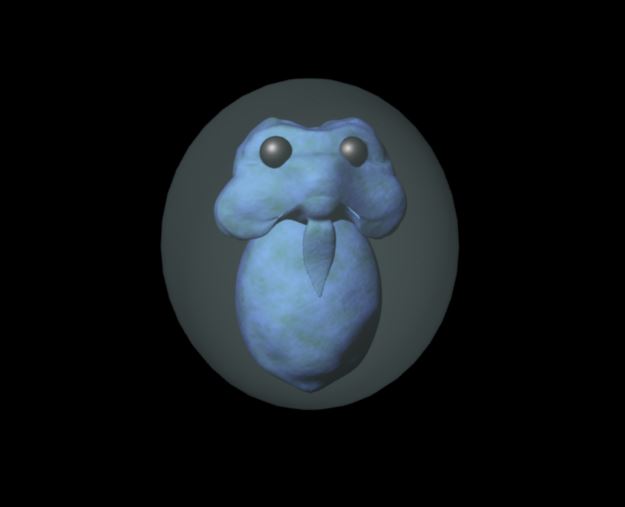
I recycled Peddler's head and I'm going to do the same with her hands.  I squashed and expanded the head to match the concept art.

BSA225, more cantina lighting! 31 June, 2016


Is it getting better?  Somewhat?  Ambient light has been turned on all the aliens and TWO green point lights.  the aliens are starting to emerge from the darkness.  I should just blow out the lights and then darken them in After Effects.  Egad.  Otherwise, I risk losing all the animation due to underexposure.